



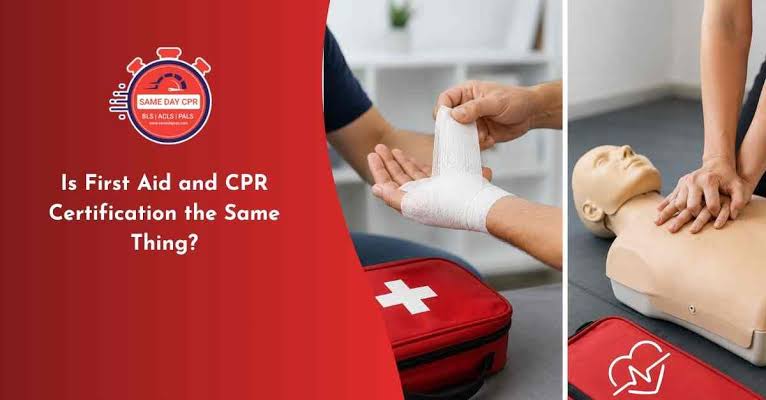
What a First Aid and CPR Course Actually Covers
Ask most people what they expect to learn in emergency response training and they will describe chest compressions. That is one component of a much broader curriculum, and the imbalance in expectation matters, because the skills people are statistically most likely to use are not the ones they signed up for. A complete first aid and cpr course covers a range of emergencies that occur far more frequently than cardiac arrest, and knowing what is inside the syllabus helps people choose the right level and take the right parts seriously.
Here is what the material actually contains.
The Resuscitation Component
This is the portion everyone anticipates. It covers recognizing cardiac arrest, activating emergency services, delivering compressions at appropriate depth and rate, and operating an automated external defibrillator.
Defibrillator training is often the surprise. Many people assume the devices require medical expertise. They are designed for untrained use, provide voice instruction throughout, and will not deliver a shock to a rhythm that does not warrant one. Ten minutes of familiarity removes the hesitation that otherwise costs time.
Rescue breathing is covered here as well, including when it is indicated and when compression-only response is the better choice.
Choking Response Across Age Groups
The technique differs meaningfully between adults, children, and infants, and the differences are not intuitive.
Courses cover the conscious response, the transition when a person becomes unresponsive, and the specific modifications for infants, which use back blows and chest thrusts rather than abdominal thrusts. For parents and childcare workers this section alone frequently justifies the training.
Bleeding and Wound Management
Severe bleeding can become life-threatening within minutes, faster than emergency services can typically arrive in most settings.
Training covers direct pressure technique, when and how to apply a tourniquet, wound packing for injuries where pressure alone is insufficient, and management of embedded objects. It also covers the far more common minor injuries, meaning cleaning, dressing, and recognizing when a wound needs professional closure.
Public access bleeding control has expanded considerably in recent years, and the skills are simple enough to be genuinely retainable.
Medical Emergencies You Are Likely to Witness
This section covers conditions that occur regularly in workplaces, schools, and homes.
Recognizing stroke, using a rapid assessment for facial droop, arm weakness, and speech difficulty, and understanding why time to treatment matters so much. Recognizing the signs of a heart attack, which frequently present differently than depicted in film and differ between men and women.
Anaphylaxis and the use of an epinephrine auto-injector. Diabetic emergencies and the distinction between low and high blood sugar presentations. Seizure response, which is mostly about protecting the person and timing the event rather than intervening. Asthma and respiratory distress.
These are the skills most participants will actually use.
Environmental and Musculoskeletal Injuries
Burns, including how to cool them correctly and what not to apply. Heat exhaustion and heat stroke, and why the distinction determines urgency. Cold injuries and hypothermia.
Sprains, fractures, and dislocations, focusing on immobilization and on avoiding well-intentioned handling that worsens the injury. Head and spinal injury awareness, including when not to move someone.
Poisoning and overdose recognition rounds out this portion.
The Part People Underestimate
Every course includes scene assessment and personal safety, and it is consistently the section participants skim.
It covers recognizing hazards before entering a scene, using barriers and gloves, and deciding when a situation is unsafe to approach. This matters because a responder who becomes a second casualty helps no one, and the instinct to rush in is strong.
Legal protections are typically covered as well, including Good Samaritan provisions, consent, and the practical reality of when duty to act applies. Many people hesitate specifically because they fear liability, and understanding the actual framework removes a genuine barrier to acting.
How Long It Takes
Course length varies by level. Emergency first aid covers a condensed range and takes less time. Standard first aid covers the full curriculum described above. Healthcare provider level focuses on resuscitation with team-based skills and equipment.
Online and blended formats let the knowledge component be completed in segments rather than in a single block, with any required hands-on assessment scheduled separately. That flexibility is why completion rates have improved for people whose schedules never accommodated a full classroom day.
Choosing Your Course
Most people need less resuscitation training and more of everything else than they expect. Choose a level that covers the full first aid curriculum unless a specific role requires otherwise, and pay attention to the sections on bleeding, medical emergencies, and scene safety, since those are the skills that get used.
For anyone ready to enroll, Simple CPR offers courses across these levels with flexible scheduling. Visit the site to compare options and find the right fit for your role.