



What Happens When Someone Collapses, and Who Is Actually There
Cardiac arrest is not a hospital event. The overwhelming majority occur outside a medical setting, in houses, workplaces, arenas, and shopping centres, and the person nearest to the patient is almost never a clinician. That is the situation anyone considering online CPR certification in Canada is preparing for, and understanding how it unfolds explains why bystander training matters more than any other single factor a community controls.
The sequence, realistically
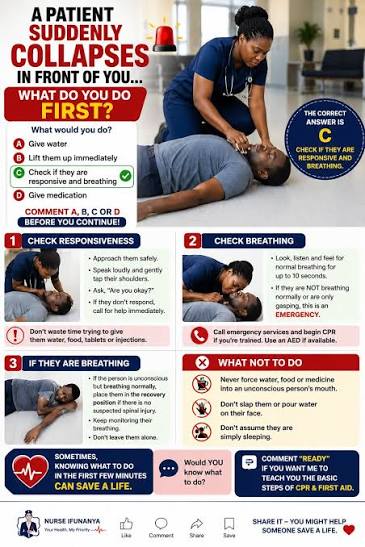
Someone collapses. For a few seconds, nobody moves, because a collapse does not announce itself as cardiac arrest. The person may make gasping sounds, which is agonal breathing and is frequently mistaken for breathing. It is not, and it is one of the most common reasons bystanders wait.
Someone calls 911. Canadian dispatchers are trained to provide CPR instruction over the phone, and they will coach a caller through compressions. This is a genuinely valuable resource and it is also slower than knowing already, because the dispatcher must first establish what is happening.
Then there is a gap. Paramedics are coming, and until they arrive the outcome rests entirely on whoever is in the room.
Why the gap is the whole story
Survival from cardiac arrest falls sharply with every minute that passes without compressions. Immediate bystander CPR meaningfully improves the odds, and defibrillation within the first few minutes improves them further.
The problem is not that Canadians are unwilling. It is that a substantial share of arrests still receive no bystander CPR at all, and hesitation is the main cause. People are afraid of doing it wrong, afraid of hurting someone, or unsure whether the situation is what they think it is.
Training addresses all three, and the third one most of all. The recognition question, is this actually an arrest, is what training answers fastest.
The AED nobody uses
Public access defibrillators are now installed in arenas, community centres, offices, schools, and transit stations across the country. They are also substantially underused, because people are uncertain whether they are permitted to touch one.
They are. AEDs are designed for untrained users. The device analyses the rhythm itself and will not deliver a shock unless one is indicated, which means it cannot be used to harm someone who does not need it. It speaks instructions aloud. Retrieving one and switching it on is always the right call when a second person is available to do it.
Every province and territory has Good Samaritan legislation protecting people who provide reasonable assistance in good faith. The specifics vary, and they exist precisely so that hesitation of this kind does not cost lives.
Where training fits, and what to check first
Two distinct reasons to train, and it matters which applies to you.
If nobody is requiring it, and you simply want to be capable, online training is the fastest and most accessible route to real knowledge. There is no gatekeeping and no requirement to satisfy.
If an employer, a regulatory college, a school, or a licensing body is asking for a certificate, confirm what they accept before you purchase anything. Workplace first aid and CPR in Canada is regulated provincially, through WSIB in Ontario, WorkSafeBC, Alberta’s OHS Code, and CNESST in Quebec, and approved certification includes an in-person skills assessment. Online study handles the theory efficiently in those cases, but it supplements the requirement rather than replacing it.
Getting this straight beforehand is a five-minute conversation. Getting it wrong costs the price of the course and the time.
The part that persists
Whichever route applies, the knowledge is what carries. Compression depth and rate, recognising agonal breathing, and knowing an AED is safe to use are not credentialing questions. They are the things that determine what happens in the four minutes before an ambulance arrives.
The courses at Simple CPR are self-paced and built on current resuscitation guidelines, which makes them well suited to anyone training for capability rather than compliance. The person nearest to the next collapse is statistically an ordinary bystander. Training decides which kind.