


Many riders who are new to rodeo or Western performance events often ask, is barrel racing dangerous? The short answer is that, like any equestrian sport, barrel racing carries risks because it involves speed, sharp turns, and working with large, powerful animals. However, research has consistently shown that barrel racing generally has a lower injury rate than many other rodeo events, especially roughstock competitions such as bull riding and bareback riding.
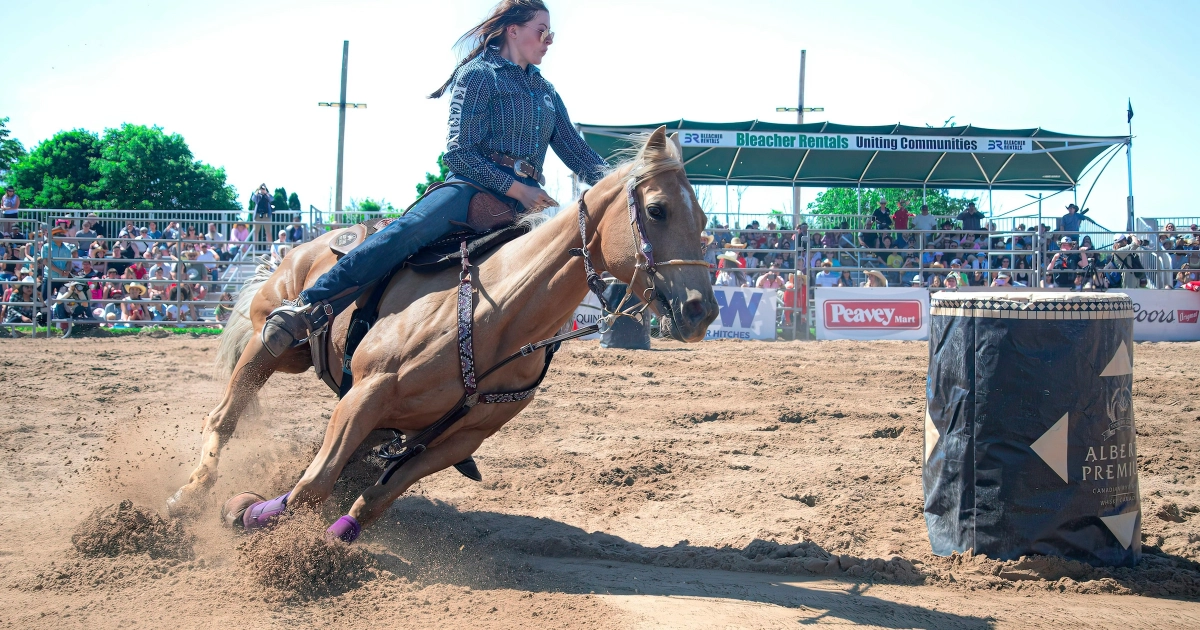
Barrel racing challenges horse and rider to complete a cloverleaf pattern around three barrels in the fastest possible time. Success depends on speed, precision, communication, and balance rather than direct interaction with livestock. Although falls and injuries can occur, proper training, quality equipment, and safe riding practices significantly reduce the risks for both horse and rider.
Understanding the Risks
Every equestrian discipline carries some level of risk because horses are large animals capable of sudden movements. In barrel racing, the primary hazards include:
- Rider falls
- Tight turns around barrels
- Slippery or uneven arena footing
- Collisions with barrels
- Horse missteps
- Equipment failure
Most injuries occur when a horse loses traction, a rider loses balance during a turn, or unexpected conditions affect the run. These risks are not unique to barrel racing and are common across many horseback riding activities.
How Barrel Racing Compares to Other Rodeo Events
Barrel racing is often perceived as dangerous because of the speed involved. However, studies of rodeo injuries tell a different story.
Research has consistently found that bull riding accounts for the highest number of rodeo injuries, followed by bareback riding and saddle bronc riding. Barrel racing, by comparison, has one of the lowest injury rates among rodeo events. A recent systematic review likewise found ladies’ barrel racing among the lowest-risk rodeo disciplines by injury rate, although serious accidents can still occur.
This doesn’t mean barrel racing is risk-free. Instead, it highlights that proper preparation and horsemanship play a significant role in keeping the sport as safe as possible.
Horse Training Is Essential
A well-trained barrel horse is one of the biggest factors in reducing risk.
Successful horses are taught to:
- Respond consistently to rider cues
- Maintain balance through turns
- Accelerate and slow down smoothly
- Stay focused despite distractions
- Build strength gradually
Proper conditioning also helps protect joints, muscles, and tendons during repetitive training sessions.
Rushing a young or inexperienced horse into competition increases the likelihood of mistakes that could result in falls or injuries.
Rider Preparation Matters Too
Barrel racing demands athletic ability from the rider as well as the horse.
Experienced riders focus on:
- Maintaining a balanced seat
- Looking ahead through each turn
- Using controlled rein cues
- Developing core strength
- Improving timing
Many riders also cross-train to improve flexibility, balance, and endurance, allowing them to remain secure throughout fast runs.
Safety Equipment Can Reduce Risk
Although helmets are not required at every competition, many riders choose to wear certified equestrian helmets to reduce the risk of head injuries during a fall. Protective riding boots with proper heels help prevent feet from slipping through stirrups, while well-maintained tack reduces the chance of equipment failure.
Before every ride, it’s good practice to inspect:
- Saddle fit
- Cinches
- Stirrup leathers
- Bridle components
- Horse leg protection
Regular equipment checks help prevent avoidable accidents.
Arena Conditions Are Often Overlooked
Even experienced horse-and-rider teams can struggle if arena conditions are poor.
Safe barrel racing depends on:
- Proper footing depth
- Consistent arena maintenance
- Good traction
- Adequate lighting
- Sufficient space for stopping
Many competitors will choose not to run if the footing appears too hard, too deep, or too slippery because unsafe ground increases the likelihood of injury. Experienced riders frequently note that arena conditions are among the biggest safety factors in the sport.
Building Skills Gradually
One of the safest ways to begin barrel racing is by progressing through training instead of focusing immediately on speed.
Riders often start by:
- Walking the barrel pattern
- Trotting consistent turns
- Developing balance
- Building horse confidence
- Gradually increasing speed
This method allows both horse and rider to develop strong fundamentals before competing at full speed.
Conclusion
So, is barrel racing dangerous? Like every equestrian discipline, it involves some risk, but evidence suggests it is generally safer than many other rodeo events when practiced responsibly. Proper horse training, rider preparation, quality equipment, and well-maintained arena conditions all contribute to reducing the likelihood of injury. By emphasizing horsemanship over speed alone, riders can enjoy one of the most exciting Western sports while helping protect both themselves and their horses.
To learn more about barrel racing, Western riding, and other equestrian disciplines, visit Saddle Up Colorado. Their educational resources offer practical guidance, riding tips, and informative articles to help riders make confident decisions both in and out of the arena.