


Staircases play an important role in residential design, influencing both the appearance and functionality of a home. For builders, remodeling contractors, and interior designers, selecting the right material is essential for creating stairs that withstand daily use while complementing the surrounding interior. Among the available hardwood options, white oak stair treads have become a preferred choice for residential projects because of their natural beauty, durability, and design flexibility. Their distinctive grain patterns and compatibility with different finishes make them suitable for both traditional and contemporary spaces.
1. Natural Beauty That Complements Different Interior Styles
White oak features subtle grain patterns and natural color variations that create a warm, inviting appearance. Its neutral tones work well with various flooring materials, wall colors, and architectural details.
Unlike hardwoods with more pronounced reddish tones, white oak generally offers a balanced appearance that complements modern interiors.
Depending on the cut and finish, it can support several design styles:
- Modern interiors: Light finishes create a clean, open appearance.
- Traditional homes: Warm stains complement classic woodwork and furnishings.
- Farmhouse designs: Natural wood tones add character and texture.
- Transitional spaces: Neutral finishes connect contemporary and traditional elements.
For interior designers, this versatility makes white oak a practical material when coordinating staircases with the home’s overall design.
2. Durability for Everyday Residential Use
Staircases experience repeated foot traffic, making material hardness an important consideration.
White oak has a Janka hardness rating of approximately 1,360 pounds-force, compared with approximately 1,290 pounds-force for red oak. This makes white oak a suitable option for residential staircases that require a durable hardwood surface.
Its dense structure offers resistance to everyday dents and wear, although the finish, installation quality, and maintenance routine also influence long-term performance.
For flooring contractors and homebuilders, choosing a hardwood with proven durability can help meet homeowner expectations for staircases in frequently used areas.
White oak also contains naturally occurring tyloses that make its pores less permeable than those of red oak. However, proper finishing and moisture management remain necessary for interior wood installations.
3. Design Flexibility Through Different Finishes
One of the main advantages of white oak is its compatibility with a variety of wood finishes.
Homeowners can select lighter finishes that showcase the natural grain or choose darker stains for a more traditional appearance.
Popular design approaches include:
- Natural finishes: Highlight the wood’s original color and grain.
- Light neutral stains: Complement contemporary flooring and minimalist interiors.
- Medium brown finishes: Add warmth to traditional living spaces.
- Cool-toned stains: Coordinate with modern gray and neutral color palettes.
When specifying stair materials, designers should examine physical samples under the property’s lighting conditions.
This step helps identify potential differences between stair components and adjacent hardwood flooring before installation begins.
4. Prefinished White Oak Treads Reduce On-Site Finishing Work
For professional installers, project scheduling is an important consideration when selecting staircase materials.
Prefinished hardwood treads arrive with a factory-applied protective finish, eliminating the need to stain and coat the tread surfaces after installation.
This offers several practical benefits:
- Reduces on-site sanding and finishing activities.
- Limits disruption caused by finishing work.
- Provides a consistent factory-applied coating.
- Makes installation scheduling easier to manage.
Factory-finished products are particularly useful for occupied-home renovations where homeowners want to minimize dust, odors, and extended finishing periods.
Unfinished white oak remains a suitable alternative when a project requires specialized stain colors or coordination with flooring being finished on-site.
The choice depends on the project’s design requirements, budget, and construction schedule.
5. Suitable for Both New Construction and Staircase Remodeling
White oak stair components are available in different configurations to accommodate residential construction and renovation projects.
Traditional Hardwood Treads
Traditional solid hardwood treads are commonly used in new staircase construction or projects involving complete tread replacement.
They are installed directly onto suitable structural supports and require accurate measurements and proper fastening.
Retrofit Stair Treads
Retrofit treads are designed for renovating suitable existing staircases without replacing the entire structure.
They can be installed over properly prepared existing steps, making them useful when converting carpeted stairs into hardwood stairs.
Contractors must evaluate the staircase structure, finished dimensions, and applicable building codes before choosing either installation method.
6. Coordinating Stair Treads With Flooring and Accessories
A well-designed staircase should visually connect with nearby flooring and architectural features.
For a consistent appearance, professionals should consider matching wood species, stain colors, and finish sheen.
Complementary risers, landing treads, and molding also contribute to the completed staircase.
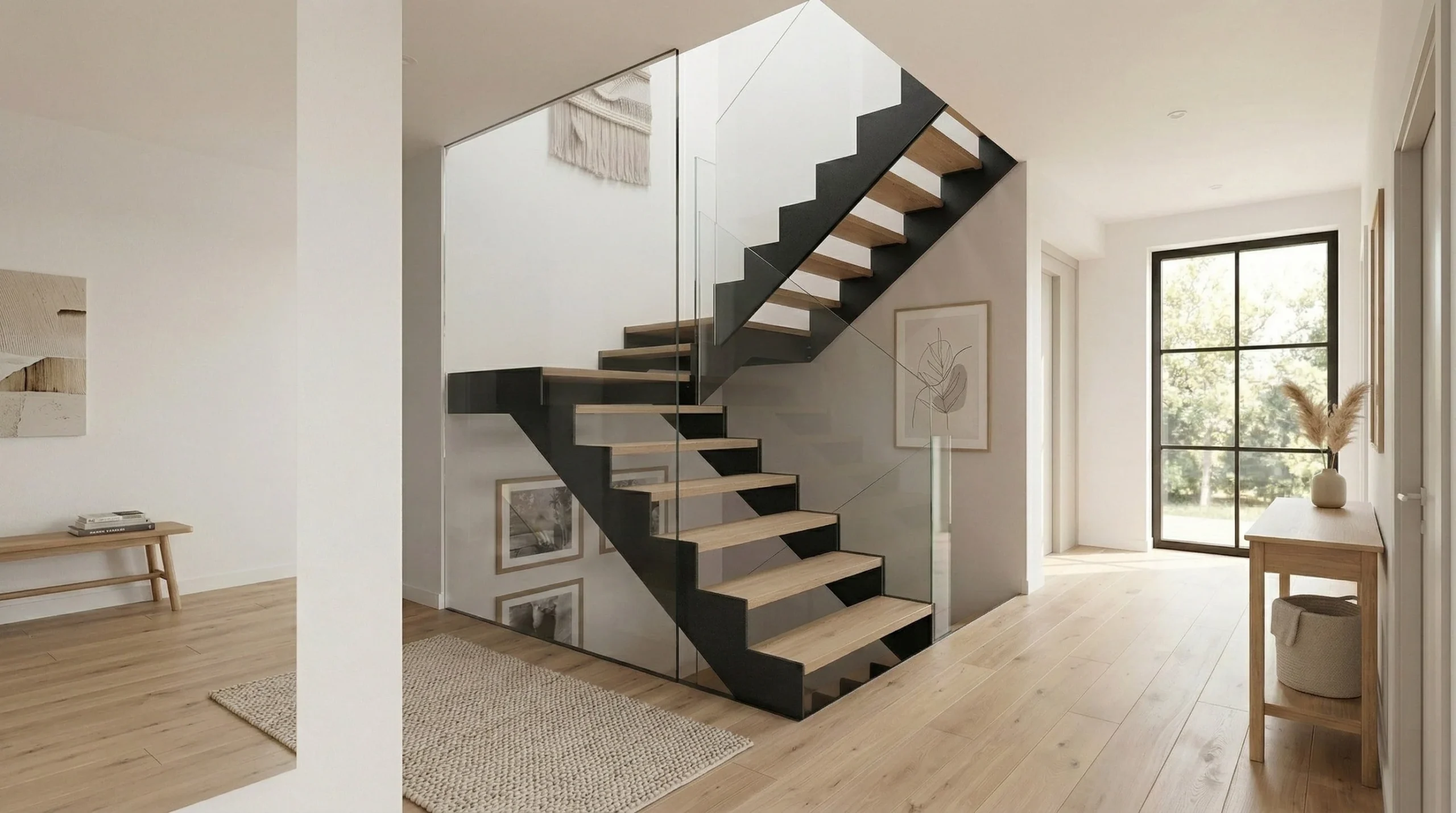
For example, white risers paired with natural white oak treads create a noticeable contrast, while matching hardwood risers provide a more continuous wood appearance.
Discussing these details during the planning stage helps prevent mismatched materials and unexpected installation changes.
7. Important Considerations Before Installation
Successful hardwood stair installation begins with accurate planning.
Contractors should confirm tread measurements, staircase condition, attachment requirements, and material compatibility before ordering.
Additional considerations include:
- Measuring each step individually.
- Checking riser height and tread depth.
- Confirming nosing and return configurations.
- Following manufacturer installation instructions.
- Meeting applicable local building code requirements.
Proper preparation contributes to consistent results and helps avoid costly adjustments during construction.
Conclusion
White oak offers an appealing combination of natural appearance, durability, and design flexibility for residential staircases. Whether used in new construction or remodeling, it provides flooring professionals and designers with material options suited to different architectural styles and installation requirements.
For builders, flooring dealers, contractors, and design professionals planning their next staircase project, Wood Stair Co offers prefinished and unfinished hardwood stair treads, retrofit products, traditional treads, risers, and coordinating stair components. Explore the available white oak products and finish options to select the right materials for your next residential project.