


A boxwood tree topiary is an easy way to add structure, greenery, and timeless elegance to a space without the maintenance that comes with live plants. Whether you’re decorating a front entryway, refreshing a porch, or filling an empty corner indoors, boxwood topiaries can create a polished look while working with a variety of decorating styles. Artificial boxwood trees are especially versatile because they stay green year-round and don’t require watering, pruning, or specific lighting conditions.
From symmetrical entryway displays to modern indoor arrangements, here are 10 stylish ways to incorporate boxwood tree topiaries into your home or commercial space.
Why Choose Boxwood Tree Topiaries?
Before exploring the decorating ideas, it helps to understand why boxwood topiaries remain popular.
Artificial boxwood topiaries offer several advantages:
- Year-round greenery: They maintain their appearance regardless of the season.
- Low maintenance: No watering, fertilizing, or trimming is required.
- Versatile styling: Boxwood works with traditional, modern, farmhouse, and contemporary interiors.
- Easy placement: Artificial plants can be used in areas with little or no natural light.
- Long-lasting décor: Quality faux greenery can remain part of your décor for years.
- Consistent appearance: You don’t have to worry about yellowing leaves, pests, or seasonal changes.
Because of these benefits, boxwood topiaries can be particularly useful when you want greenery to serve as a permanent decorative element.
1. Frame Your Front Door With Matching Topiaries
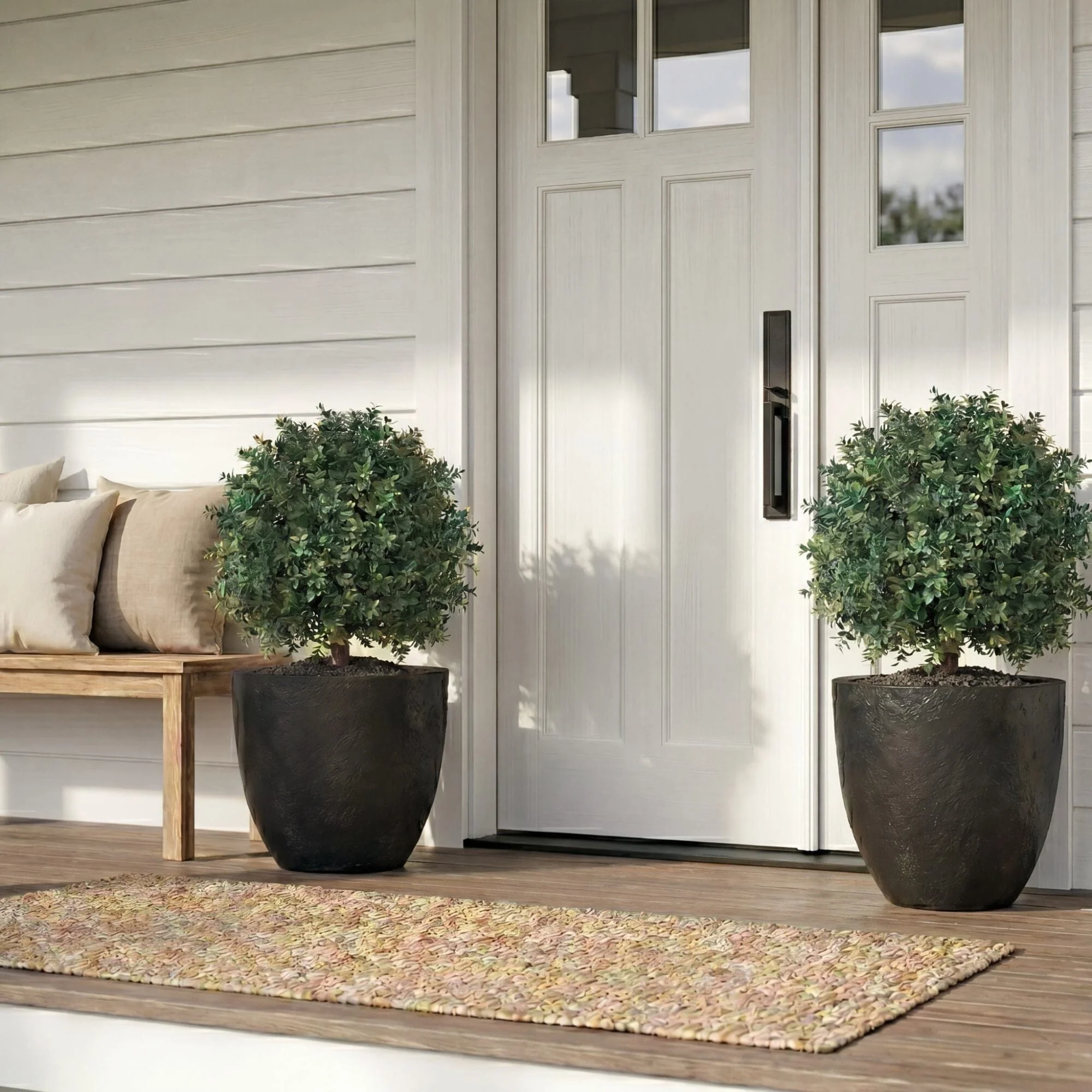
One of the most classic ways to use boxwood topiaries is to place a matching pair on either side of your front door.
The symmetry immediately creates a more balanced and welcoming entrance. Choose two topiaries of similar height and place them at equal distances from the doorway.
Styling tips
- Choose matching planters for a coordinated appearance.
- Select taller topiaries for large or double doors.
- Use neutral planters for a timeless appearance.
- Leave enough clearance around the door for comfortable movement.
- Add seasonal wreaths or door décor without overwhelming the greenery.
This arrangement works particularly well for traditional homes and formal entrances.
2. Create an Elegant Porch Arrangement
Your porch is one of the first areas visitors see, making it an ideal place for decorative greenery.
Instead of placing a single plant randomly in a corner, use boxwood topiaries to create a deliberate arrangement. Position one on each side of the porch steps, near columns, or beside seating areas.
For larger porches, you can combine different heights to create visual layers.
Try this combination:
Tall boxwood topiary + medium planter + seasonal accent
For example, you could pair a tall topiary with a simple ceramic or stone-colored planter and add a seasonal lantern nearby.
The greenery provides a permanent foundation while smaller accessories can change throughout the year.
3. Use a Boxwood Topiary in an Entryway
Indoor entryways often have empty corners that can be difficult to decorate. A boxwood tree can fill these spaces without making the area feel overcrowded.
Place a topiary near:
- A console table
- An entryway bench
- A staircase
- A coat rack
- A large mirror
- The corner opposite the front door
For a sophisticated look, pair the topiary with a large mirror. The greenery adds softness while the mirror helps reflect light and visually expand the space.
Pro tip
Avoid hiding the entire plant behind furniture. The topiary should have enough room around it to become an intentional focal point.
4. Add Greenery to a Minimalist Living Room
Minimalist interiors don’t necessarily have to be completely free of greenery.
A carefully selected boxwood topiary can add organic texture while maintaining a clean aesthetic.
Choose a simple planter in a neutral shade such as:
- White
- Beige
- Gray
- Black
- Natural stone
Place the topiary next to a sofa, media console, bookshelf, or accent chair.
The key is restraint. Instead of filling the room with multiple decorative plants, use one well-positioned topiary as a statement piece.
5. Decorate an Empty Corner
Large empty corners can make a room feel unfinished. A tall artificial boxwood tree can solve this problem without requiring additional furniture.
Consider using one in:
- Living rooms
- Dining rooms
- Home offices
- Bedrooms
- Hallways
- Sunrooms
If the room already has plenty of patterns and accessories, choose a simple planter and let the greenery provide the visual interest.
For a larger room, select a taller topiary that can visually connect the floor with the upper portion of the space.
6. Create a Sophisticated Dining Room Accent
Boxwood topiaries can also work beautifully in dining spaces.
Place a pair of topiaries near a sideboard, buffet, doorway, or dining room entrance. Their structured shape complements the clean lines commonly found in dining furniture.
For formal interiors, consider pairing them with:
- Brass or gold accents
- Dark wood furniture
- Neutral table linens
- Decorative mirrors
- Classic lighting fixtures
For a modern dining room, choose streamlined planters and geometric topiary shapes.
The goal is to use the greenery as part of the room’s overall design rather than treating it as an isolated decoration.
7. Style Your Home Office With Greenery
Home offices can sometimes feel overly functional. Adding artificial greenery can make the environment feel warmer and more inviting.
Place a boxwood topiary beside your desk, bookshelf, filing cabinet, or office seating area.
Unlike live plants, artificial topiaries don’t depend on window placement. This makes them useful for offices where natural sunlight is limited.
Keep the look professional
If your office doubles as a video-call background, avoid placing oversized greenery directly behind your head. Instead, position the topiary slightly to the side to create a polished background without distracting from you.
8. Pair Boxwood Topiaries With Seasonal Décor
One of the biggest advantages of artificial boxwood is that it can serve as a year-round base for changing seasonal decorations.
You don’t have to replace the greenery every season. Simply update the surrounding accessories.
Spring
Add pastel flowers, ceramic accents, or a lightweight decorative wreath.
Summer
Pair the greenery with bright planters, lanterns, or tropical-inspired décor.
Fall
Introduce pumpkins, warm-toned accessories, or rustic baskets.
Winter
Add ornaments, ribbons, pinecones, or subtle holiday accents.
This approach allows you to refresh your décor throughout the year without purchasing entirely new plants.
9. Use Topiaries to Define an Outdoor Seating Area
Artificial boxwood topiaries can help visually define different areas of a porch, patio, or covered outdoor space.
For example, place two topiaries at the edges of a seating area to create a subtle visual boundary.
You can also use them near:
- Outdoor dining tables
- Patio furniture
- Poolside seating
- Covered balconies
- Outdoor entertaining areas
If you’re using artificial greenery outdoors, make sure the specific product is designed for outdoor conditions and follow the manufacturer’s care recommendations.
For a more upscale appearance, use large decorative planters that complement your outdoor furniture.
10. Create a Grand Commercial or Hospitality Entrance
Boxwood topiaries aren’t limited to residential décor. They can also create a polished appearance in commercial spaces.
Consider using them in:
- Hotel entrances
- Restaurant entryways
- Retail stores
- Office reception areas
- Event venues
- Salons
- Showrooms
A symmetrical pair at the entrance can immediately make a space feel more organized and professional.
For commercial environments, artificial topiaries can also be practical because they maintain their appearance without requiring regular watering or daily plant care.
How to Choose the Right Boxwood Tree Topiary
The right topiary depends on the size, style, and purpose of your space.
1. Consider the Height
Measure the available space before buying.
A small topiary may disappear in a large entryway, while an oversized tree can overwhelm a compact hallway.
2. Think About the Shape
Common topiary shapes include:
- Ball
- Double ball
- Spiral
- Cone
- Tiered designs
Choose a shape that complements your existing furniture and architecture.
3. Select the Right Planter
The planter can dramatically change the overall appearance.
For traditional décor, consider classic urns or decorative containers. For contemporary spaces, streamlined cylindrical or square planters may work better.
4. Look at Leaf Density
High-quality artificial boxwood should have a convincing amount of foliage and a natural-looking texture.
Sparse foliage can make a faux plant look artificial, while overly uniform foliage may also reduce its realism.
5. Check the Intended Location
If the topiary will be placed outdoors, verify that it is suitable for outdoor use. Indoor-only products may not be designed to withstand prolonged exposure to sunlight, moisture, or changing temperatures.
How to Make an Artificial Boxwood Topiary Look More Real
Even a high-quality artificial plant benefits from thoughtful styling.
Fluff the foliage
Artificial leaves can become compressed during shipping. Gently separate and arrange the foliage before displaying the plant.
Choose a realistic planter
The right container can make a major difference. Consider materials such as ceramic, concrete-look finishes, stone, or woven baskets depending on your décor.
Vary the surrounding textures
Pair the topiary with natural-looking materials such as wood, stone, wicker, or linen.
Avoid excessive symmetry indoors
While symmetrical pairs are excellent for entrances and formal spaces, a single topiary placed slightly off-center can create a more relaxed interior look.
Keep it clean
Dust can accumulate on artificial foliage over time. Gently wipe or dust the leaves periodically to keep them looking fresh.
Boxwood Topiary Styling Mistakes to Avoid
Even simple greenery can look out of place when improperly styled.
Avoid choosing a plant that’s too small. A tiny topiary may look lost in a large room or entrance.
Don’t overcrowd the space. One well-positioned topiary can be more effective than several plants competing for attention.
Don’t ignore the planter. A beautiful topiary paired with an unsuitable container can make the entire arrangement look disconnected.
Avoid placing every plant against a wall. Give larger topiaries some breathing room when possible.
Don’t forget proportion. Consider the relationship between the topiary, furniture, ceiling height, and surrounding décor.
Final Thoughts
A boxwood tree topiary is a versatile decorating element that can bring structure and year-round greenery to entryways, porches, living rooms, offices, and commercial spaces. Whether you prefer the classic symmetry of matching entrance topiaries or the relaxed look of a single tree in an empty corner, there are countless ways to incorporate this timeless style into your décor.
For an easy-care alternative to live greenery, Fake Flowers offers artificial floral and greenery options that can help you create attractive arrangements without the ongoing maintenance associated with real plants. With the right size, planter, placement, and styling, artificial boxwood can become a lasting part of your home’s décor.
