

Flowers can make a room feel softer, brighter, and more finished, but fresh arrangements require regular care and replacement. For homeowners, decorators, and real estate professionals who want a similar visual effect with less upkeep, realistic fake flowers can offer a practical alternative. When chosen and styled carefully, artificial arrangements can add color and texture without looking out of place.
Start With Natural-Looking Details
The difference between an arrangement that looks convincing and one that feels artificial often comes down to small details.
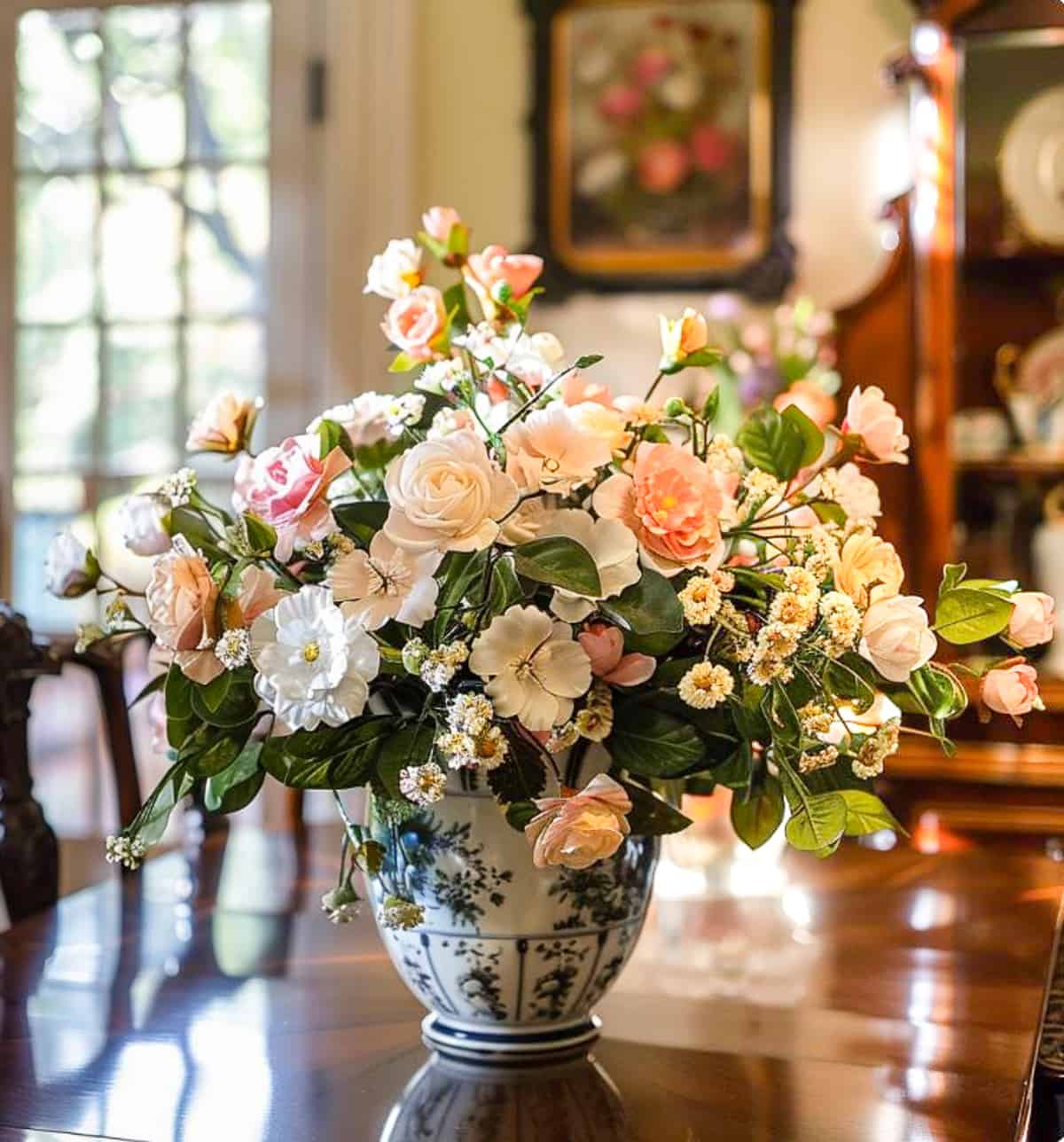
Look for flowers with varied petal shapes, subtle color changes, and realistic stems and leaves. In nature, flowers are rarely perfectly symmetrical or identical. Arrangements that include slight differences in height, shape, and color tend to feel more believable.
Avoid overly glossy leaves or extremely bright colors unless they suit the specific flower variety. Softer finishes and natural tones usually blend more easily into residential interiors.
The goal is not to create a flawless arrangement. It is to create one that feels like it belongs in the room.
Choose a Size That Fits the Space
Scale plays a major role in successful floral styling.
A small arrangement may disappear on a large dining table or console, while an oversized bouquet can overwhelm a narrow side table. Before choosing flowers, consider the width and height of the surface where they will be displayed.
For coffee tables and nightstands, smaller arrangements generally work best. Kitchen islands, dining tables, and entryway consoles can handle larger pieces.
Tall arrangements can work well in areas with high ceilings or substantial furniture, but they should not block views or interfere with conversation.
Matching the size of the flowers to the furniture around them helps the arrangement look intentional.
Pair Flowers With the Right Container
The vase or planter can change the entire appearance of an artificial arrangement.
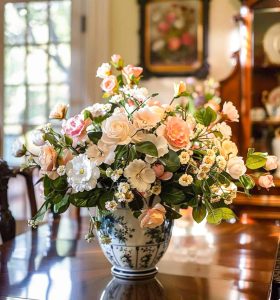
Clear glass works well for simple, airy arrangements, while ceramic containers can provide a more substantial look. Woven baskets can suit relaxed or rustic spaces, and metal or stone-style containers may fit more modern interiors.
The container should also complement the flowers rather than compete with them.
If the arrangement already includes several colors, a neutral vase may be the better choice. For simple greenery or white flowers, a more decorative container can introduce contrast.
Consider the surrounding materials as well. A vase that connects with nearby furniture, hardware, or textiles can help the arrangement feel like part of the room rather than an isolated accessory.
Match the Arrangement to the Room
Different rooms call for different types of floral décor.
Living rooms often benefit from medium-sized arrangements placed on coffee tables, side tables, or consoles. Bedrooms usually work better with softer, smaller pieces that do not dominate the space.
In kitchens, simple arrangements can add color to an island or breakfast area. Bathrooms can benefit from compact florals that brighten counters or shelving without taking up too much room.
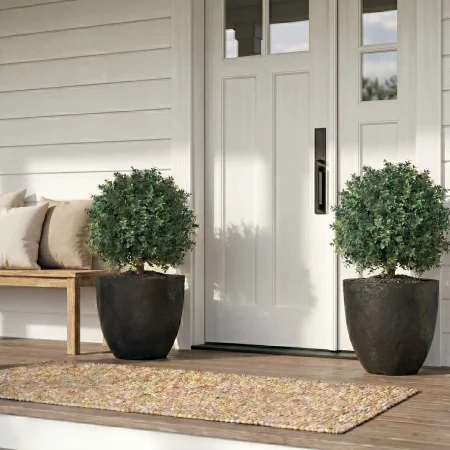
Entryways are ideal for arrangements with enough height to create a strong first impression.
The style of the room should guide the flower selection. Modern spaces often suit simple arrangements with fewer stems, while traditional rooms can support fuller bouquets.
Keep the Arrangement Slightly Imperfect
Perfect spacing is one of the easiest ways to make artificial flowers look artificial.
Fresh flowers naturally sit at different angles and heights. Replicating that irregularity helps create a more relaxed appearance.
Instead of arranging every stem at the same level, vary the heights slightly. Allow a few stems to lean outward rather than keeping everything perfectly upright.
You can also leave some open space between flowers. A densely packed arrangement is not always more convincing.
For a more casual look, combine flowers with greenery or branches that extend beyond the main shape of the bouquet.
Use Artificial Flowers in Home Staging
Artificial arrangements can be especially useful for realtors and home stagers.
A property may need to look photo-ready and welcoming for several weeks, making fresh flowers less practical. Artificial options can maintain a consistent appearance without regular replacement.
In staging, flowers should support the room rather than become the main focus.
A simple arrangement on a kitchen island can draw attention to a large workspace. Flowers on a dining table can help buyers imagine entertaining in the room. A small arrangement in a bathroom or bedroom can introduce color while keeping the space neutral enough to appeal to different buyers.
They can also be moved easily between rooms depending on photography, open house, or showing needs.
Avoid Common Styling Mistakes
One of the biggest mistakes is using too many floral arrangements in the same room. This can make the décor feel busy and reduce the effect of each piece.
Another issue is using the same arrangement throughout the entire home. Varying flower types, colors, and container styles can make the décor feel more natural.
Dust can also affect appearance over time. Regular light cleaning helps artificial flowers retain their color and texture.
Finally, consider placement carefully. Flowers should not block televisions, mirrors, artwork, or important architectural features.
Create a More Finished Interior
Artificial flowers can be an easy way to introduce color, texture, and softness without changing furniture or making permanent design decisions. With the right size, container, placement, and styling, they can work in everyday homes as well as properties prepared for sale. For homeowners, decorators, retailers, and staging professionals looking for natural-looking floral décor, visit Fake Flowers to explore options for different rooms, seasons, and interior styles.